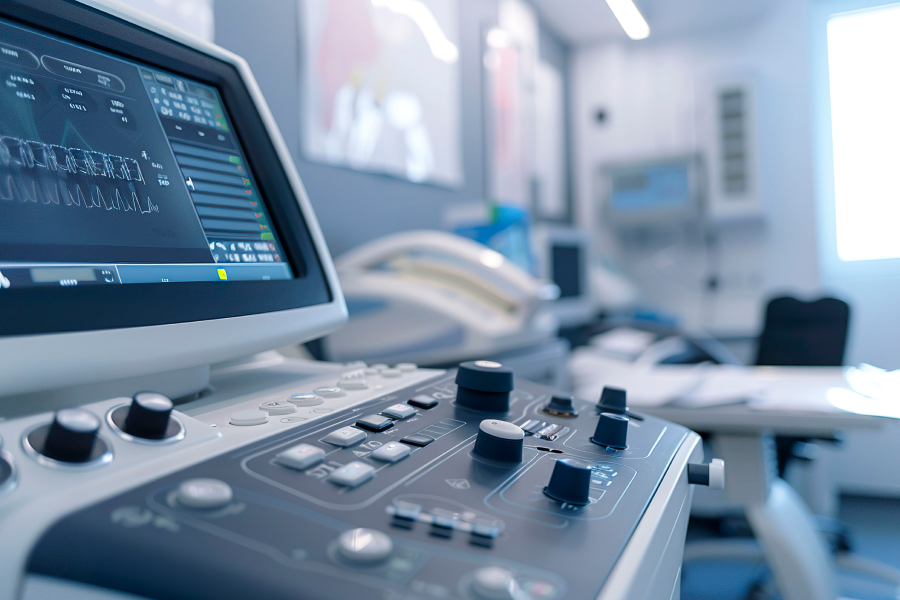
Ultrasound

Ultrasound (Sonography)

Ultrasound uses high-frequency sound waves to create real-time images of the body’s internal structures. A handheld probe (transducer) emits sound waves, producing images displayed on a monitor.  Ultrasound does not use radiation, making it a safe option even for sensitive populations such as pregnant women and children.

USES

Abdominal

Evaluation of the liver, gallbladder, pancreas, kidneys, and spleen to detect conditions such as gallstones, liver disease, or kidney obstruction.

Musculoskeletal

Assessment of tendons, ligaments, joints, and muscles for injuries, inflammation, or tears.

Small Parts

Imaging of the thyroid, breast, scrotum, and lymph nodes to detect nodules, cysts, or masses.

Advantages

Ultrasound (Sonography)

Ultrasound uses high-frequency sound waves to create real-time images of the body’s internal structures. A handheld probe (transducer) emits sound waves, producing images displayed on a monitor.  Ultrasound does not use radiation, making it a safe option even for sensitive populations such as pregnant women and children.

Advantages

  • Safe, non-invasive, and radiation-free 
  • Provides real-time, dynamic imaging

Uses

Abdominal imaging

Evaluation of the liver, gallbladder, pancreas, kidneys, and spleen to detect conditions such as gallstones, liver disease, or kidney obstruction.

Musculoskeletal

Assessment of tendons, ligaments, joints, and muscles for injuries, inflammation, or tears.

Small parts

Imaging of the thyroid, breast, scrotum, and lymph nodes to detect nodules, cysts, or masses.